Apparently the settlement that would become the city of San Francisco was once called Yerba Buena, which is where this quirky physics platformer got its name. Set in an alternate reality 1970’s version of the City by the Bay, my 90-minute demo had me rushing to rescue a friend, discovering the first seeds of a government conspiracy, and scratching my head over a lot of the writing decisions.
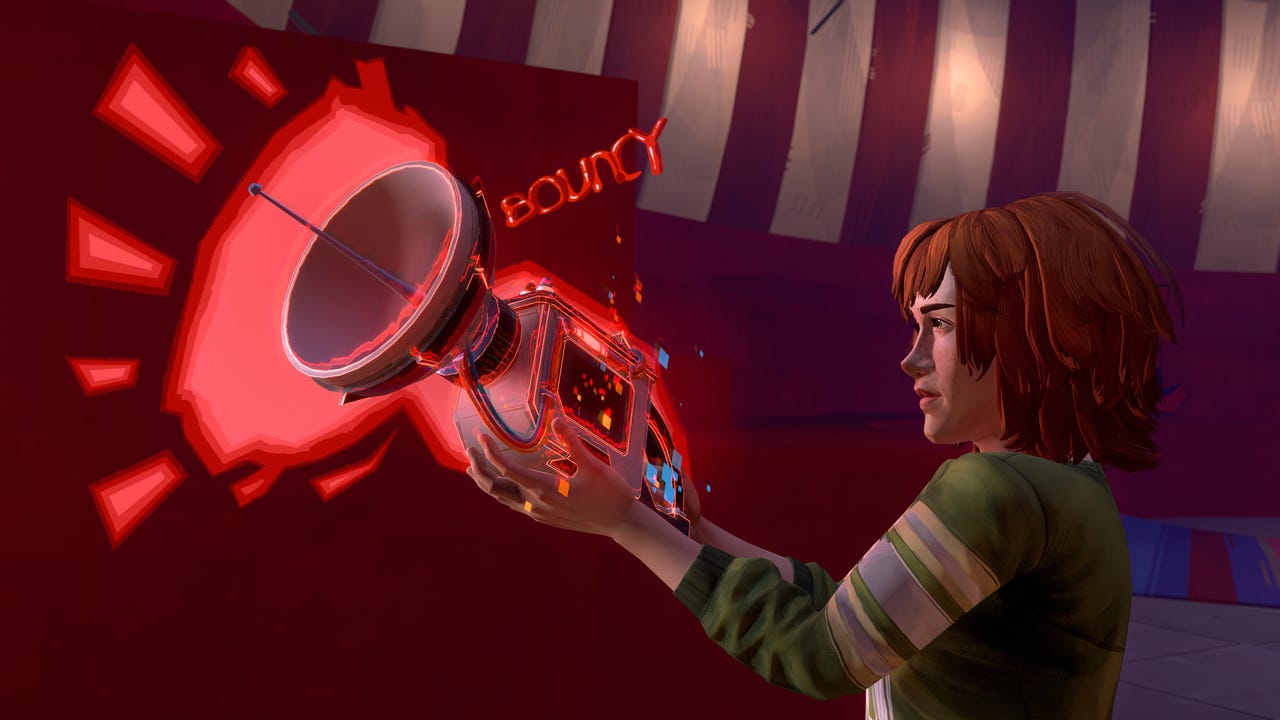
On the plus side, the art in Yerba Buena is quite charming. It reminds me a bit of some of Telltale’s older games, like it was torn out of the pages of a graphic novel. The characters are richly designed with clothing and hairstyles that ground everything in the ‘70s. The colorful streets capture an almost mythological ideal of SF, a city I lived in for years and still feel very fondly about. And the jaunty soundtrack is fun, too. The writing doesn’t exactly complete the illusion, though.
The main character is Barb, an out-of-work Midwest transplant who’s likeable enough. But nothing in Yerba Buena’s plot seems to flow naturally from what came before it. There are simply fixed moments it wants to get to and it will make any excuse to jump from where we are to where it wants to be, even if it requires bizarre leaps of logic or characters coming to really weird conclusions. The whole tension of the first section hinges on the fact that the SFPD have decided the life of one of Barb’s friends who was taken hostage by bikers isn’t important, and they’re going to storm the building to get the perp even if it means sacrificing a civilian.
Look, I’ve had my fair share of negative interactions with the police, but no hostage negotiation I’ve ever heard of amounted to, “Tough luck, he shouldn’t have been taken hostage!” This leads Barb to have to mount a one-woman vigilante rescue mission involving time travel and physics puzzles. And that’s where we get into the main gameplay mechanic: The Oscillator.
In essence, Yerba Buena seems like it kind of wants to be Portal. The Oscillator is a technomagical device that allows you, at first, to copy the movement of one object and apply it to another. There are some genuinely cool applications for this. You can copy a speeding car and then apply it to an entire apartment, causing it to fly across the street with you in it and let you access the rooftops the next block over. Later, it gains the ability to “copy” any vapor and then apply that property to a solid object to allow you or other objects to pass through it.
It’s a neat idea, even if there are only two areas to mess around with The Oscillator in the demo aside from a brief training course: a San Francisco city block and a psychedelic amusement park that exists in some kind of pocket dimension? Again, the story is pretty difficult to parse. I found a mix of clever puzzles with a few that I’m not sure were super well thought-out. But the potential of these mechanics at least has me curious to see what else the full game might pull off. I suppose the writing does as well, but in more of an, “unable to look away from a train wreck” sort of way. There’s a very, “I went to San Francisco for GDC a couple times and decided I wanted to set a game here” feeling to how German studio Mad About Pandas depicts everything. It’s the ‘70s, but there’s a major plot point about a tech mogul wanting to ruin a local park by building a giant TV antenna, which seems like it’s struggling to take more recent problems and transport them back in time to the chosen era.It gets even weirder when you find out the fugitives who kidnapped your friend were apparently – and I’m not making any of this up – a special biker gang unit in the Vietnam War who were experimented on to give them superpowers like the Avengers or something. You reveal this by discovering a certificate of Court Martial – that looks like an award you would get in school and hang on the wall – with the name of the gang filled in on a blank line. The tone is kind of light-hearted, but this isn’t played for laughs. It’s not a comedy game. At least, I don’t think it’s supposed to be?In addition to this, the leader of the gang, Bear, seems to be able to reload a save any time he dies. Literally. You see a menu pop up over his dead body while he selects the option to reset time to an earlier point. Seemingly all of the characters are aware that this is happening, including the ones who aren’t in the gang! But they handwave it away as a trivial oddity just like they do everything else, because no one in this universe follows logic resembling our Earth logic.
Its endearing visual style and relatable main character weren’t quite enough to get me excited to play more Yerba Buena given the confusing plot and dismal quality of the writing. The puzzle possibilities of The Oscillator might, though. Especially if we haven’t seen all of the tricks it can do yet. You’ll be able to see it for yourself on May 26 on PC, PS5, and Xbox Series X|S.
Leana Hafer is a contributing freelancer for IGN with a specialty in RPGs, strategy, horror, and survival games. She has been reviewing video games professionally since 2010 and is one of IGN’s most prolific contributors, with more than 100 reviews published. You can also find her work on sites like PC Gamer and PCGamesN.