When director James Gunn and producer Peter Safran were elevated to co-chair roles at DC Studios in 2022 and set out to reboot DC’s movie franchise, launching the theatrical arm of the new DC Universe with a Superman movie written and directed by Gunn himself was a sensible move. As a Superman fanboy, Gunn got to reclaim one of DC’s most iconic characters from the dark-and-dour, grim-and-gritty place Zack Snyder had taken him to. As one of the primary architects of the new DC cinematic universe, Gunn could lay out a template for what he wanted the DCU to look and feel like. And as a longtime superhero hitmaker, with a sizable fandom for his past projects (from Peacemaker to Marvel’s Guardians of the Galaxy movies to his offbeat Suicide Squad), Gunn got to leverage his personal popularity into goodwill for DC at a tricky, transitional time for the company.
Following up Superman with a pivot to less familiar DC characters, and letting creators other than Gunn take the reins, was also the smart play. Immediately rebooting the other members of DC’s holy triumvirate, Batman and Wonder Woman, would have looked too much like replicating the Snyder playbook, and would have lacked any sense of novelty. The DCU’s second theatrical outing, Supergirl, switches over to less familiar characters, as if trying to ease the DCU out from under Snyder’s long shadow. Supergirl also puts those characters in the hands of other creators, making it clear that Gunn’s house style is replicable, and that the studio isn’t entirely dependent on his authorship.
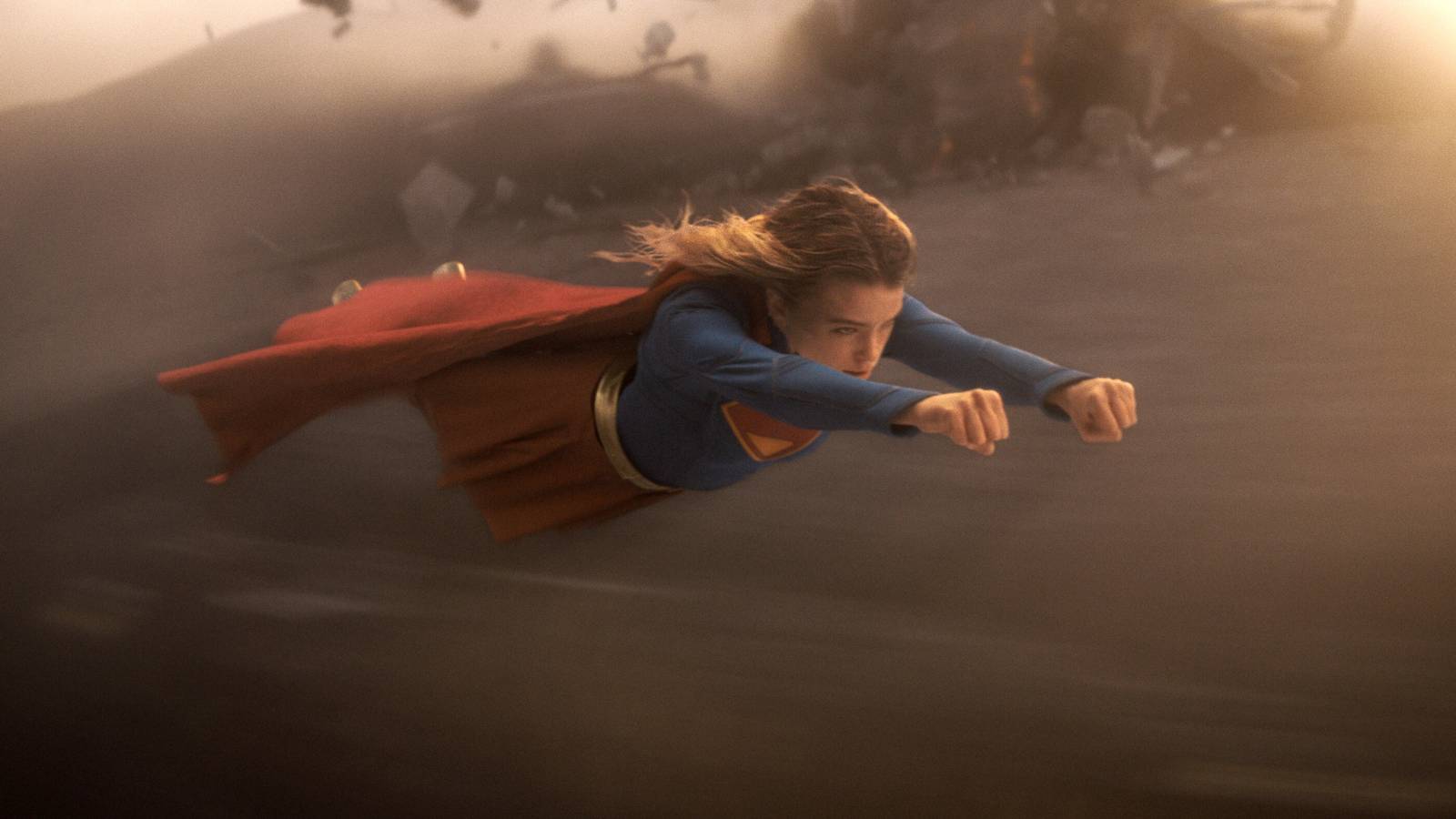
If you squint, it’s hard to tell Supergirl from a pre-Superman James Gunn movie. Director Craig Gillespie (Cruella) and writer Ana Nogueira (a playwright and actor with several DC projects in preproduction) go all-in on Gunn’s signature style, from spinning-camera combat sequences to a Guardians-esque messy universe crammed with aliens to the snarky, subversive, but ultimately admiring and sentimental take on superheroes. The result isn’t exceptionally exciting, but it’s serviceable, good-natured, and frequently fun — particularly when the film rests in the hands of Milly Alcock as Supergirl.
The storyline is extremely loosely derived from Tom King and Bilquis Evely’s Supergirl: Woman of Tomorrow, an eight-issue comics arc that’s more or less a space-opera twist on Charles Portis’ 1968 Western novel True Grit. Like that story, Supergirl centers on a steely young girl seeking vengeance, and the much stronger adult she tries to hire or suborn into helping her.
In this case, the young girl is teenage Ruthye (Eve Ridley), who just watched the alien raider Krem (Matthias Schoenaerts, covered in facial piercings and eye prosthetics) murder her entire family while stealing most of the weapons made by her world-class swordsmith father. (Weirdly, those swords never become part of the story once that initial scene is complete.) Armed with her father’s last remaining blade, Ruthye wants to track Krem down and kill him. Her quest brings her to Kara Zor-El (Alcock), aka Superman’s cousin Supergirl, who’s more or less enjoying a weeklong interstellar pub crawl to commemorate her 23rd birthday.
Like her famous cousin, Kara becomes invulnerable and gains incredible power when exposed to the radiation of yellow suns. So if she wants to get blind, stinking drunk, she has to seek out red-sun planets like Ruthye’s, where she’s much more physically susceptible to alcohol — or the fists and weapons of the various people who try to prey on Ruthye’s weakness and naïveté. Like Marshal Rooster Cogburn in True Grit, Kara unsuccessfully resists getting drawn into some kid’s personal drama. Unlike Cogburn, Kara gets involved because she’s a hero at heart, even when she’s on a self-destructive multi-planet bender, trying to forget her own personal drama.
Supergirl dumps most of the grim incident, colorful detail, and startling twists that make up Woman of Tomorrow, in favor of a much more straight-line, surface-level version of the story. Too much of what follows operates in predictable, repetitive circles: Kara tries to leave Ruthye behind or park her somewhere safe, Ruthye doggedly pushes forward and gets into trouble, Kara saves her. In all versions of the True Grit story, the Ruthye equivalent is kind of shrill and kind of a pill — but she’s usually more capable and resourceful than she is in Supergirl, and less inert. The comics version of Ruthye speaks in near-comedically flowery prose and tells elaborate stories; the movie version is blunt, glowering, and one-note, though Ridley gives her an aching sincerity.
Schoenaerts similarly doesn’t get much to work with. Krem is a two-dimensional villain from a two-dimensional crew of leering, generically bloodthirsty Mad Max types with a broadly sexist worldview designed to gin up a little gender tension and girl-power catharsis. Their society, we’re told, is all-male, and devoted to kidnapping young girls as “brides.” Those many nameless brides, running around at various points of the movie in identical grubby sack dresses, haplessly trying to escape the latest Supergirl-vs.-raiders rout, feel like an element stolen from Mad Max: Fury Road without any other context or detail, apart from establishing that the villains are villainous.

Alcock is Supergirl’s saving grace. Veering between cocksure and swaggering, cheerfully sloppy-drunk and barely in control of herself, and disintegrating under the weight of her own grief, rage, and despair, Kara/Supergirl takes up all the space in the movie that would otherwise be left empty by the thinly written characters around her. Alcock is a warm, winning performer who clearly brings across both Kara’s sunny, gung-ho foundation and the visible cracks undermining it. She radiates a charisma the movie sorely needs to differentiate it from other post-apocalyptic quest stories, and that the character sorely needs to differentiate her from endless other superheroes that have crowded onto movie screens over the past two decades.
This Supergirl is much more human than the nobly suffering god-figure from King and Evely’s comic. She’s sillier, more reckless, more vulnerable, and closer to complete breakdown. She’s an innately decent person who feels some of the same draw to help other people that defines her cousin Clark/Superman (David Corenswet, who cameos in several short scenes), but also feels that decency as a burden on an already strained psyche. Supergirl isn’t an origin-story movie, but it does cover Kara’s origins, both in terms of explaining why there’s another Kryptonian running around Metropolis, and in explaining the core troubles that have her running (or flying) away from Earth in general.
The intergalactic setting she flees to feels familiar from Gunn’s Guardians of the Galaxy movies, even though those take place in another cinematic universe entirely. It’s a big, messy universe that sometimes feels like a knockoff version of Star Wars’ chaotic blend of alien species and cultures — far less defined, and more like a series of conveniently whimsical backdrops than like an interconnected galaxy, but still more affable and relatable than the Star Wars universe. Still, Supergirl’s extended spacefaring community is packed with predators, and it’s certainly no place for an inexperienced kid to be running around alone.

It is, however, an appropriate setting to find Lobo (Jason Momoa, stepping away from his Snyderverse duties as Aquaman to take on the DC role he’s been agitating to play for years). The immortal bounty hunter (and Wolverine parody) isn’t particularly well integrated into the story. He’s an observer and occasional minor obstacle, seemingly in the mix as a draw to fanboys who might otherwise not see any reason to watch a movie about two young women bonding, regardless of how super one of them is.
Momoa fits appropriately into the role, which doesn’t require much more than some smirking, some cigar-smoking, some weaponized-hook-on-a-chain swinging, and a few tossed-off lines about various NPC-level characters being “bastiges.” He’s clearly having fun giving Lobo his first live-action big-screen outing, but there’s just the smallest hint here of Channing Tatum finally getting to play Gambit in Deadpool & Wolverine. In both cases, it feels a little like watching a movie star get professional help pulling off a particularly aspirational piece of cosplay.
Maybe that’s the biggest issue with Supergirl. The title character gets her due as a hero who’s as powerful and noble as Superman, but strongly distinctive from him in meaningful ways. But every other aspect of the film just feels like DC Studios cosplay laid over a fairly familiar story, with not enough work put into making it unique. True Grit is a solid story that’s easily reskinnable, and King and Evely’s version put a quaint yet modern spin on it that feels unique. Supergirl, by comparison, could have used a few more drafts that paid as much attention to the villain, the sidekick, and the visiting anti-hero as it pays to the title character.

Supergirl isn’t a regrettably bad outing or a sharp downward turn for the DCU experiment. It just lacks the ambitious, oversized verve of Gunn’s Superman, much less his other superhero work. Gillespie mimics Gunn’s visual style passably enough, and Nogueira nails the tricky new-DCU tone, which moves closer to Marvel’s house style in terms of blending humor and pathos, while hanging onto DC’s focus on less human heroes that are still emblematic of the best parts of humanity. It’s all solid work, and it was a solid decision to get this bright, broad movie before veering to another, more conventional DC project, like Matt Reeves’ upcoming Batman 2, or a seemingly weirder one, like the next in the DCU lineup, the R-rated Clayface.
Still, where Gunn’s Superman set a high bar for weirdness and unexpected ways of reimagining familiar characters, Supergirl strolls under that bar without ever coming close to touching it. It suggests that the DCU may finally have an identity of its own, but that identity isn’t as startling or challenging as Superman might have suggested.
Supergirl opens in wide release on June 26.
Twenty movies. Four choices each. How well do you know summer at the cinema?
Which summer 2026 movie is this?
Final Score
0 / 20