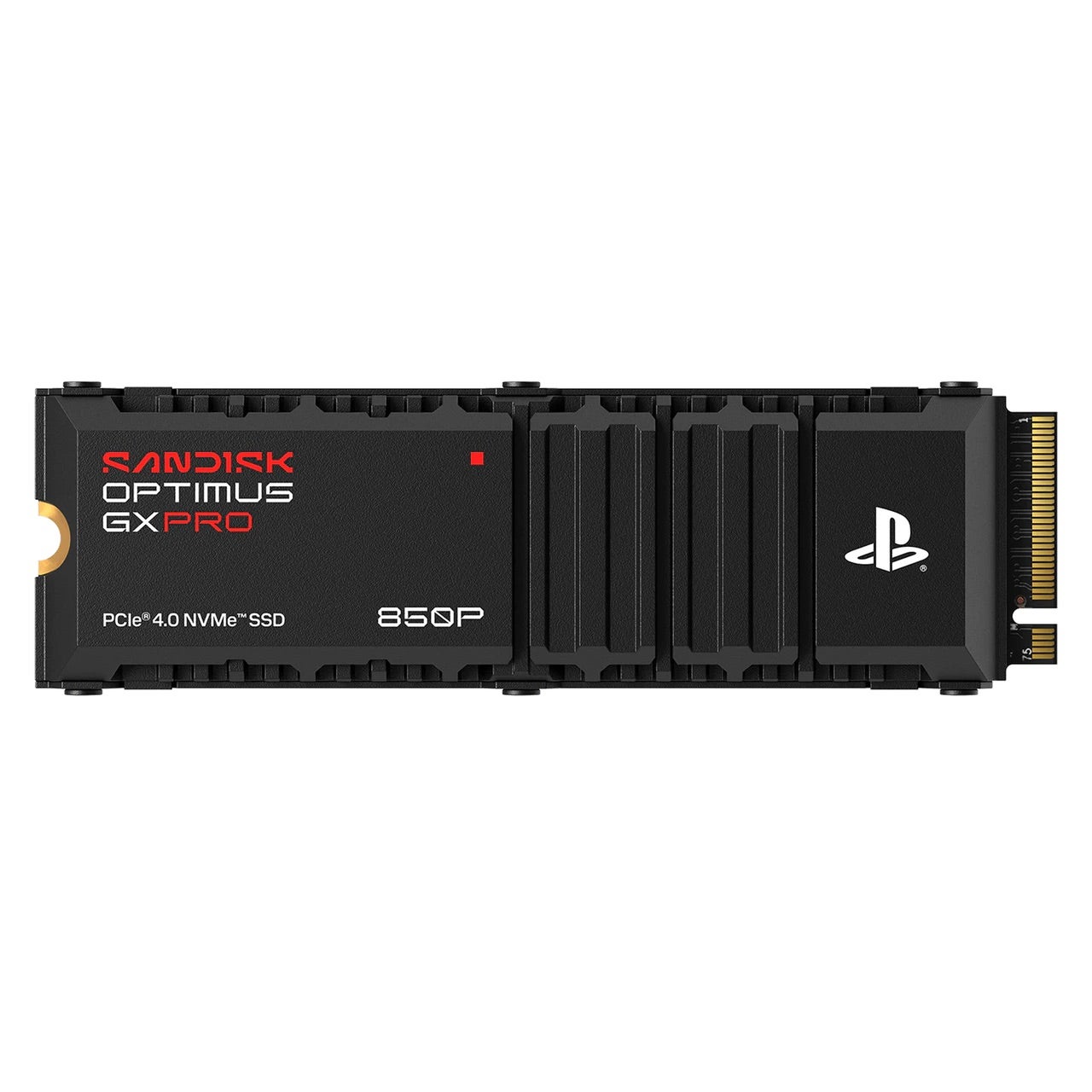
SanDisk has today unveiled Optimus GX PRO 850P, a series of officially-licensed NVMe SSDs for PlayStation 5 and PlayStation 5 Pro. The SSDs, which users can insert into their console to expand its storage, also work with PCs.
The line-up is made up of four products, each offering a different capacity. And given the current memory and storage crisis, you may not be surprised to learn the prices of these new SSDs.
They start at £339/$380 for the 1TB model, and go all the way up to an eye-watering £2639/$2960 for the 8TB variant. These prices are discounted, too, according to SanDisk’s website, which does not currently show a buy button for some reason.
The 2TB option will run you £678/$760, while the 4TB model is priced £1337/$1,500. If you haven’t noticed, all but the smallest capacity model cost more than the price of the PS5, and the top option is over three times the price of a PS5 Pro – and that’s based on current PS5 prices, which Sony raised in March.
The new drives are based on the PCIe 4.0 standard, boasting impressive specs of up to 7300MB/s sequential read speed, and 6600MB/s sequential write speed. They come with an integrated heatsink bearing the PlayStation logo.
This is just the latest example of how the AI-driven demand for more datacentres has inflated the prices of memory and storage globally. Console manufactures, like almost all other makers of consumer electronics, have had to raise prices multiple times over the last 14 months. Sony, Microsoft, and Nintendo have all done this, keeping the door open for potentially more price raises in the future to cover ballooning costs.
The crisis has effectively brought an end to affordable computing, across PCs, consoles, and hobby-grade projects like the Raspberry Pi. There’s currently no clear end in sight. It’ll be interesting to see how Valve’s Steam Machine deals with this pricing challenge.
By most accounts, we’ll be struggling with this crisis for a couple of years to come – just look at how unsure platform holders are about when they’re going to introduce the next generation of consoles, with estimates suggesting 2028 or 2029 as potential targets. For now, the best strategy is to hug the consoles and PCs you may already have.

