I’ve said it before and I’ll say it again: very few games have stuck with me as long after completion like the original Life is Strange did way back in 2015. While we’ve had some great spinoffs and an excellent follow up to that original story with 2024’s Life Is Strange: Double Exposure, it still felt like the series was missing something. Sure, the point-and-click adventure gameplay has definitely evolved since Max’s adventure in Blackwell Academy, and Double Exposure took the series to new heights with a more refined writing style and mature approach to some heavy topics, but it always seemed to be missing that one core aspect that made the original resonate so much with so many people over a decade ago.
Thankfully, with the return of series co-protagonist Chloe, Life is Strange: Reunion finally feels like all the necessary pieces are in play to not only deliver another chapter to its ever expanding world, but it also acts as a shining example of how to end a long lasting story like Max and Chloe’s.
The story in Life is Strange: Reunion starts about a year after Double Exposure and swaps between Max and Chloe’s perspectives. This version of Chloe is shown to have moved on after what happened in the original game and became a manager for an all girl punk band. She’s become her own woman, and even though she’s now in her thirties, Chloe is very much still the same character she was in the original game, just with a new hair color. She’s been dealing with strange visions involving Max and eventually decides to figure out what happened.
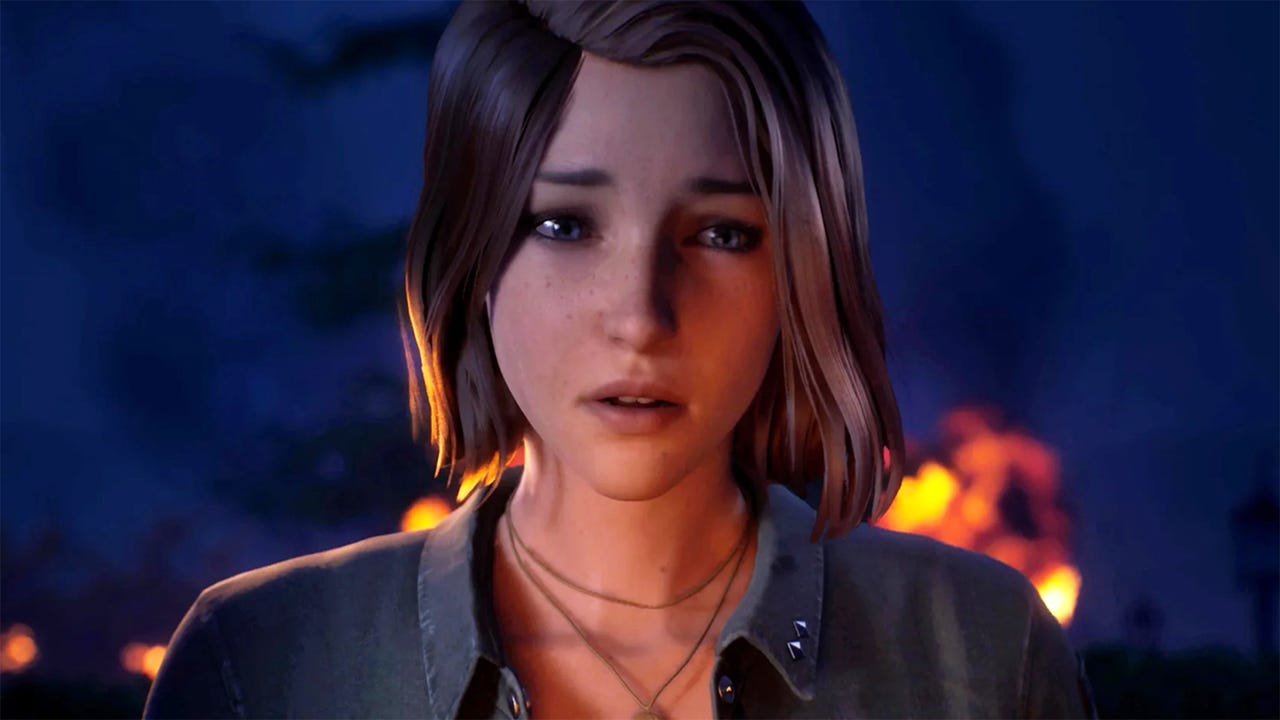
Max has moved on and grown in her career as a teacher and photographer, and while the ramifications of what happened at the end of the last game are still lingering with multiple timelines merging into one, it seems like for the first time in the entire series, Max is able to move on with her life and has found a place to call home. Naturally, since this is a Life is Strange game, that happiness is abruptly ruined by a fire that not only destroys Caledon University, but also causes Max to witness some pretty brutal deaths of her students and friends. I was pretty surprised at how quickly the game went from 0-60 and within minutes of watching the title card pop up on screen over a picturesque fall day during golden hour, I was watching Max fail to save a building full of people choking to death in a fire. Eventually she uses her powers to blast back three days and the whodunnit-it mystery the series is known for begins, and it never really slows down from there.
Without getting into any more spoilers, the story takes a few twists and turns that I genuinely wasn’t expecting and its choices definitely felt more meaningful in Reunion than they did in Double Exposure, True Colors, and even the original episodic game. There were choices I made that completely changed the way I played the ending and the fate of way more characters than I had expected. Because of this, I was eager to go back and play the game multiple times to see everything Reunion had to offer and decide which ending was the “best” for me. And there are plenty of threads to uncover here.
From easily skippable text messages, to Max and Chloe’s journal entries, and a handful of very well executed podcasts to listen to. Reunion does an excellent job at building its world and telling a compelling story without having too much additional bloat and exposition. Sure, there are quite a few conversations with NPCs that probably didn’t add anything to the world other than a little bit of flavor, and there were a few times in the game where I wished there was a skip dialogue option, but when compared to other Life is Strange games, it’s pretty obvious that Reunion’s story is significantly more focused this time around in the best way possible.
Death anxiety plays a massive role in Reunion’s story. By this point both main characters have dealt with the deaths of each other and tons of people around them. Max has both witnessed and participated in Chloe’s death multiple times by now, and Chloe has had to deal with knowing that she’s died a few times and has visions of Max killing her. The stakes are pretty high in Reunion because, unlike past entries dealing with themes such as loneliness, depression, and generally growing up. Life is Strange: Reunion gives Max the ultimate “what if” by giving her back the most important person in her life, just to have her taken away again, and again. The plot really hits its highest points when we see what happens to Safi, Chloe, and the rest of Caledon University whenever Max rewinds time and tries to fix the future.
That’s not to say that its storytelling was perfect. There were a few instances where I felt like there could have been a few more optional people to talk to and things to interact with to help make Caledon and its surrounding areas feel a little more lifelike. Around the start of the third act, it really felt like Chloe and Max didn’t get enough time to talk about their lives and how strange it is for Max to see the love of her life come back from the dead (a death I chose for her back in 2015) or how Max and Chloe’s relationship deteriorated not long after they left Arcadia Bay at the end of the first game. While they do have a few instances of catching up and talking to each other about past traumas and how they ended up back together, Reunion could have used a little more time with the two of them talking over how traumatic someone coming back from the dead would be.
The gameplay in Life is Strange: Reunion is about what you would expect from a point-and-click whodunnit game, but still adds a few new twists that make this final outing for Max and Chloe interesting. Max has her usual time reversal powers that need to be used to solve some pretty interesting puzzles, like a sequence where you need to cut the power to a handful of explosives in a very short amount of time. Admittedly, I died a few times while trying to figure out the optimal path from bomb to bomb and there are a few instances where the combination of the game’s score and characters expressing their anxiety made for some surprisingly tense moments. Something past Life is Strange games never managed to pull off.
Conversations involving Max typically ended with me hitting the rewind button and trying to get a better answer out of someone, while most of the time this was required to progress in the story, there were a few instances where I was subtly given the choice to rewind time and not tell a character something and leave them completely clueless. This open ended dynamic with Life is Strange’s core choose your own adventure mechanics was an interesting addition to the gameplay and made the story feel even more like my own custom tailored experience.
Chloe’s gameplay, on the other hand, involved a new talk back mechanic where I would need to make the correct answers in order to “win” an argument with someone. These weren’t as easy as seemed and there were a few times I messed up a confrontation and lost the argument. Unlike playing as Max, I didn’t have the luxury of rewinding time to fix my mistakes and had to live with my choices. By adding this additional gameplay dynamic to Life is Strange it made Max’s powers more dynamic and special and made playing as Chloe more fun because I couldn’t just rewind time and get the answer I wanted.
While Chloe and Max’s gameplay was fun and exactly what I was expecting in Reunion, I was a little disappointed that there weren’t any sort of mini games outside of being able to use Max’s camera in a very limited fashion. For a series about a world class photographer living in one of the most lush and picturesque environments I’ve seen in a video game, it’s always irked me that there is no sort of photo mode other than using Max’s camera to take photos that can’t be saved anywhere in the game unless it’s of a specific collectible object. Past titles had some sort of mini game included and Reunion just doesn’t.
Which leads me to my biggest issue with Life is Strange: Reunion. The game was a great experience overall and exactly where I wanted to see the story go after the end of Double Exposure, but throughout my time with it, I felt like it was a little short. Now don’t get me wrong, these days it’s nice to play a game that doesn’t require 100+ hours of my time, and it’s refreshing to get a story that’s as concise and tight as Reunions. But there was a point when I was getting to the end where I was wishing there was just one more environment to explore or one more character to interact with or a flashback sequence or something. Perhaps some of that is knowing that a story I’ve been following for the last decade was wrapping up and I wanted more, but from a general gameplay standpoint, it felt like Reunion could have used just a little more backstory considering that this is the end of the main plotline in the series.
Life is Strange: Reunion’s presentation is exactly what you would expect from the series at this point. Its cinematography is an excellent emulation of an A24-like film, the music is once again a major highlight with both its excellent score and appropriate needle drops, and the environments look great, even more so when playing on PC with the visuals cranked up to “hella high.” It’s definitely something that will hold up over the years thanks to its cartoony but also realistic looking art direction and outstanding facial capture and performances from its cast.