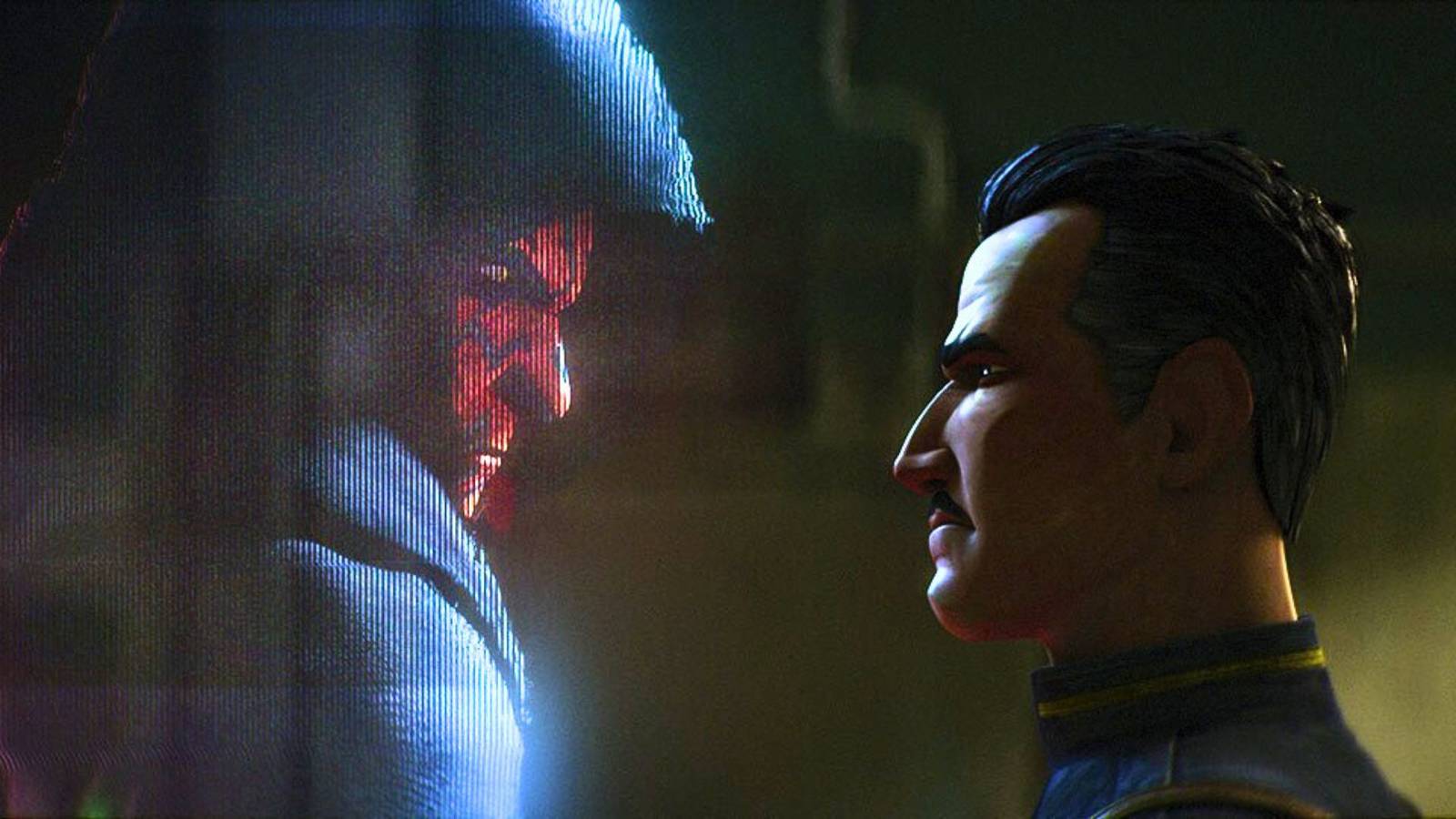
The idea of a Star Wars show centered on Darth Maul didn’t appeal to me at first. I was never one of the fans who were bewitched by the grim-looking, double-lightsaber-wielding Sith lord when he first appeared in 1999’s The Phantom Menace. Even when Maul returned from the dead with badass spider-robot legs in the animated series The Clone Wars, I wasn’t totally sold. The guy is cool and all, but a whole show dedicated to him? I was skeptical that Lucasfilm could pull it off.
I was wrong. Not only is Star Wars: Maul — Shadow Lord a stunning and compelling homage to the pulpy neo-noir genre set in a galaxy far, far away, but it also reaffirms what attracted fans to Darth Maul years ago: his relentless refusal to surrender in a galaxy where he’s destined to fail again and again.
Set shortly after Revenge of the Sith, Maul: Shadow Lord follows Maul (brilliantly portrayed, as always, by Sam Witwer) as he attempts to rebuild his criminal empire. After the Shadow Collective, an alliance of crime syndicates fell apart due to the threat of the nascent Empire, Maul finds himself with few allies and fewer resources. He needs to start over. Janix, a planet untouched by the Empire and Imperial control, is the perfect place.
It’s easy to compare Janix to a far more famous city-planet in Star Wars: Coruscant. But while darkness lurks on the lower levels of Coruscant, its vast, sprawling landscapes and impeccably designed buildings paint the planet as more of a symbol of stability and progress. Janix, on the other hand, is dark and drab, even in the daylight. It feels more vibrant and alive at night, as if to show how much of the planet is controlled by gangs and mobsters. Its city streets are lit up by gunfire and police speeders, shadows intensified by whispered threats and backroom deals. If Coruscant is Metropolis, then Janix is Gotham through and through.
It’s this inherent darkness of Janix — a civilization built up from a literal crater — that makes it such a fantastic playground for Maul. Alongside the remnants of the Death Watch Mandalorians and Nightbrothers loyal to him, Maul seeks to consolidate power. The result is that those who abandoned him to seek favor with the Empire (namely, his old gangster buddies) are pitted against each other. While they scurry around and blame one another, Maul is a menacing shadow that watches it all with satisfaction. His machinations against the syndicates resemble a typical gangster noir film, right along with classic gumshoe characters like weary Janix police captain Brander Lawson (Wagner Moura) and his partner, Two-Boots (Richard Ayoade), a well-meaning but protocol-driven droid.
The biggest potential wrench in the works for this gripping, crime-filled journey is the introduction of the show’s requisite Jedi: Devon Izara (Gideon Adlon) and her dinosaur-like master, Eeko-Dio Daki (Dennis Haysbert). Survivors of the terrible (and often overused) Order 66, they’re hiding out in Janix to stay under the Empire’s radar. While you might think the arrival of the Jedi would make this gritty crime show lose its noir edge, the fact that they no longer have the protection of their reputation as guardians of peace and justice actually enhances it — they, like everyone else, are trapped by the threat of the Empire. While Maul views Janix as fertile ground to conquer and build an army to take on the Empire, Daki and Devon are simply using the planet’s lack of Imperial presence as a hiding spot. Despite the pressure on both of them, Daki is cool as a cucumber. No matter what’s thrown his way — whether that be blaster fire or a speeding vehicle — he deals with it all with such ease, grace, and empathy that he’s easily one of the standout characters of Shadow Lord.

On the other hand, Maul sees his own anger and frustration about what the Empire took from him reflected in Devon, who doesn’t understand why she and Daki are hiding when they’ve done nothing wrong. It’s not the first time the Sith Lord has seen potential in another person, and nor will it be the last. However, unlike before, when Maul only took on an apprentice in the vain hopes of winning back his old master, Palpatine, our protagonist knows better by now. His only goal is to take down the Empire, and Devon is yet another tool at his disposal.
Shadow Lord shows us a wiser, more patient Maul. His frenzied anger is still present; you can hear it in the low, gravelly growl of Witwer’s voice, but it’s smoldering rather than an inferno. Maul is at his best as an emerging crime boss, poised to grow even more in the Star Wars timeline. He becomes a stalking figure only overshadowed by the terrifying promise of an Empire eager to dominate the galaxy — a conquest Maul himself desperately desires and almost feels within reach, despite many fans knowing his doomed future.

But what truly elevates Shadow Lord for me is its breathtaking visuals. While it still shares a similar look to The Clone Wars, the overall style is entirely different. There’s a strong emphasis on black and red colors whenever we see things from Maul’s perspective — a nod to his grim appearance, no doubt, but also a perfect reminder that this isn’t a hero’s journey, but a villain’s. This is also highlighted by the eerie shadow of Maul’s horned head, which often appears when he’s watching others who don’t realize it. Maul is like a shadow, and the visuals strongly reinforce that.
Not every Star Wars project will appeal to everyone, and trying to make them all do so might push the franchise down a path it may never recover from. Andor was a spy thriller. Rogue One was a war story. The first two seasons of The Mandalorian are considered a space Western. The key to success is understanding the story you want to tell within the genre you’ve chosen. Star Wars: Maul — Shadow Lord knows what it is (a sci-fi crime thriller) and it’s at its best when it embraces that genre. With season 2 already confirmed, I hope Lucasfilm will keep highlighting why Maul is one of the fiercest mobsters in Star Wars.