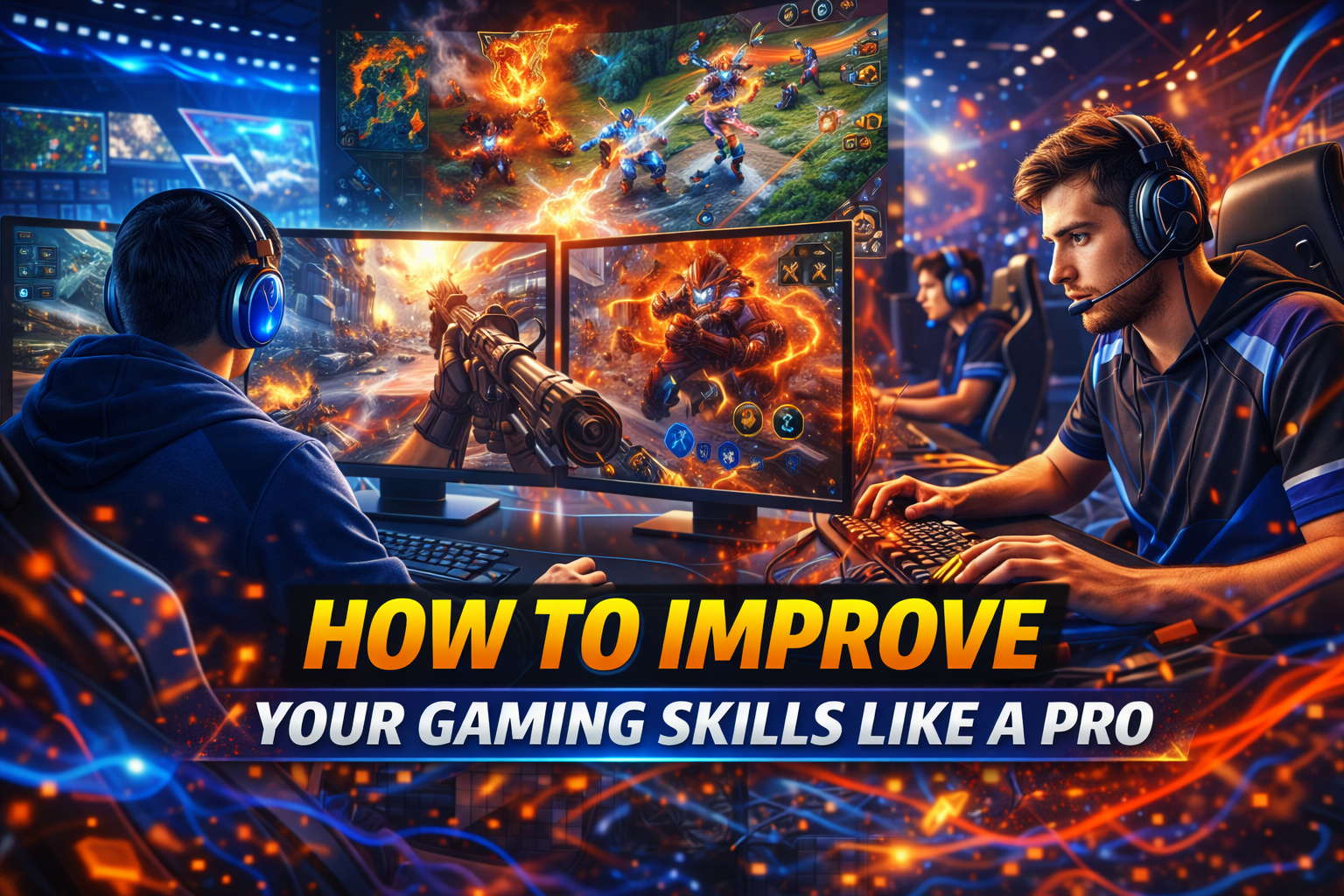
Gaming has grown from a casual pastime into a competitive arena where skills, strategy, and mental sharpness define success. Whether you play for fun, rank progression, or aspire to join esports tournaments, improving your gaming skills systematically can elevate your performance to professional levels.
This comprehensive guide provides practical advice, tips, and strategies to develop skills, enhance reflexes, and sharpen your mind like a pro gamer. By the end, you’ll have a roadmap to train effectively, optimize your setup, and master your chosen games.
Why Skill Improvement Matters
Gaming isn’t just about reaction time or hand-eye coordination—it’s a combination of mechanics, strategy, and mental endurance. Improving skills provides:
- Higher win rates: More consistent performance in competitive matches.
- Better decision-making: Faster, smarter reactions to dynamic game situations.
- Long-term growth: Ability to adapt to new games, strategies, and updates.
- Confidence: Feeling in control during intense matches reduces stress.
Professional gamers dedicate hours to structured practice and mental training, making skill improvement a deliberate process rather than accidental.
Core Skills to Improve
To improve like a pro, you need to focus on the fundamental skills that impact performance across most games.
1. Mechanical Skills
Mechanical skills involve your physical interaction with the game, such as aiming, movement, and timing.
- Key areas:
- Precision aiming (FPS, TPS games)
- Combo execution (fighting games)
- Fast resource management (RTS games)
- Timing and positioning (sports games)
- Tips for Improvement:
- Use aim trainers like Kovaak’s FPS Aim Trainer or Aim Lab.
- Practice daily routines in-game with bots or training maps.
- Gradually increase difficulty as you improve.
- Focus on consistency rather than speed initially.
2. Game Knowledge
Understanding your game inside and out gives you a tactical advantage.
- Components of Game Knowledge:
- Maps and layouts
- Character abilities and counters
- Meta strategies and effective tactics
- Timing for objectives or rotations
- Tips for Improvement:
- Watch professional streams and tournaments.
- Study patch notes and game updates.
- Experiment with multiple characters or roles to gain versatility.
- Learn from mistakes by reviewing replays.
3. Decision-Making and Strategy
Pro gamers make the right decisions quickly, often under pressure.
- Areas to Focus On:
- Prioritizing objectives
- Risk assessment
- Predicting opponent behavior
- Resource management
- Tips for Improvement:
- Pause and analyze decisions during casual matches.
- Compare your choices with professional players’ strategies.
- Practice scenarios repeatedly to make them instinctive.
- Keep a journal of common mistakes and how to correct them.
4. Communication and Teamwork
In team-based games, communication is as important as mechanical skill.
- Skills to Develop:
- Clear callouts for positions and enemy movements
- Coordinating strategies and rotations
- Listening actively to teammates
- Maintaining calm under pressure
- Tips for Improvement:
- Use voice chat with a quality headset.
- Assign specific roles in team games to reduce confusion.
- Practice callouts during custom games.
- Build rapport with consistent teammates for better synergy.
5. Mental and Physical Endurance
Long gaming sessions demand focus, reflexes, and stamina.
- Areas to Focus On:
- Concentration during extended matches
- Stress management during clutch situations
- Avoiding fatigue to maintain performance
- Tips for Improvement:
- Take breaks using the 50/10 rule: 50 minutes of practice, 10 minutes of rest.
- Maintain a healthy lifestyle: proper sleep, nutrition, and exercise.
- Use mindfulness or breathing exercises to manage stress.
- Track mental performance and avoid overtraining.
Structuring Your Practice Like a Pro
Pro gamers follow structured practice schedules instead of random play sessions.
1. Warm-Up
- Spend 15–30 minutes warming up with aim trainers or basic drills.
- Focus on reflexes, precision, and movement patterns.
2. Focused Practice
- Break practice into specific areas:
- Mechanics (aiming, combos)
- Strategy (positioning, rotations)
- Game knowledge (learning maps, meta)
- Practice each area individually for 30–60 minutes.
3. Scrims or Real Matches
- Apply skills in real-time competitive matches or scrims.
- Treat each game as a learning opportunity, not just a win-loss record.
4. Review and Analyze
- Record matches and identify mistakes.
- Analyze decision-making, mechanical errors, and team coordination.
- Adjust practice sessions based on weaknesses.
5. Rest and Recovery
- Schedule breaks to avoid mental fatigue.
- Quality rest improves reaction times, focus, and retention of strategies.
Optimizing Your Gaming Setup
A professional-grade setup helps maximize your performance.
1. Monitor
- High refresh rates (144Hz or higher) reduce input lag.
- Lower response times (1ms) enhance precision in fast-paced games.
2. Input Devices
- Mechanical keyboards for faster keystrokes.
- Gaming mice with adjustable DPI for precision.
- Controllers for console or fighting games, optimized for responsiveness.
3. Headset
- Clear audio improves spatial awareness.
- Noise-canceling microphones enhance team communication.
4. Internet Connection
- Low latency (<50ms ping) is critical for online play.
- Wired connections reduce lag compared to Wi-Fi.
5. Ergonomics
- Comfortable chairs and desks reduce physical strain.
- Proper posture prevents long-term injuries during marathon sessions.
Learning From Professionals
Observing top players helps accelerate improvement.
- Watch Streams and Tournaments:
- Note decision-making, positioning, and reaction times.
- Analyze Replay Footage:
- Compare your gameplay to professional standards.
- Engage With Communities:
- Join Discord servers, forums, or subreddits for insights and strategies.
Advanced Training Techniques
1. Deliberate Practice
- Focus on specific weaknesses instead of playing randomly.
- Example: Aim training for headshots or practicing rotations in MOBAs.
2. Mental Rehearsal
- Visualize scenarios before matches to improve decision-making.
- Helps build muscle memory and confidence.
3. Speed and Accuracy Drills
- Time-limited exercises improve reaction times.
- Example: FPS flick shots, RTS resource management drills, combo execution for fighting games.
4. Multi-Game Skills Transfer
- Skills like reflexes, spatial awareness, and strategic thinking apply across multiple games.
- Playing varied genres enhances adaptability.
Common Mistakes to Avoid
- Neglecting fundamentals: Skipping warm-ups or structured practice.
- Overtraining: Leads to fatigue, burnout, and slower reaction times.
- Ignoring game updates: Meta changes can make old strategies obsolete.
- Poor communication: Team-based games require constant coordination.
- Focusing only on wins: Learning from mistakes is more important than the immediate result.
Beginner-Friendly Pro Tips
- Track Your Progress: Use tools to measure accuracy, win rates, and improvements.
- Set Measurable Goals: Example: improve headshot accuracy by 5% in two weeks.
- Join Small Tournaments: Gain competitive experience and exposure.
- Stay Physically Active: Exercise improves reflexes, endurance, and focus.
- Learn From Losses: Analyze mistakes rather than blaming luck or teammates.
Infographic: Roadmap to Pro-Level Gaming Skills
Core Skills -------- Mechanics, Game Knowledge, Decision-Making, Communication, Endurance
Daily Practice ----- Warm-Up, Focused Training, Scrims/Matches, Review
Equipment ---------- Monitor 144Hz+, Mechanical Keyboard, Gaming Mouse, Headset, Stable Internet
Mental Training ---- Mindfulness, Visualization, Stress Management, Goal Setting
Improvement Tips --- Watch Pros, Analyze Replays, Track Progress, Structured Practice
Avoid Mistakes ---- Overtraining, Ignoring Fundamentals, Poor Communication, Focus Only on Wins
Conclusion
Improving your gaming skills like a pro requires dedication, structured practice, and a focus on both mechanics and mindset. By training systematically, optimizing your setup, and learning from professionals, beginners can accelerate skill growth and compete at higher levels.
Remember, professional gamers didn’t reach their level overnight. Success comes from consistent practice, reflection, and adapting to challenges. By following this guide, you can take your gaming skills to new heights, whether for casual enjoyment, competitive play, or aspiring esports careers.
With focus, discipline, and smart practice, anyone can level up their gaming performance and play like a pro.