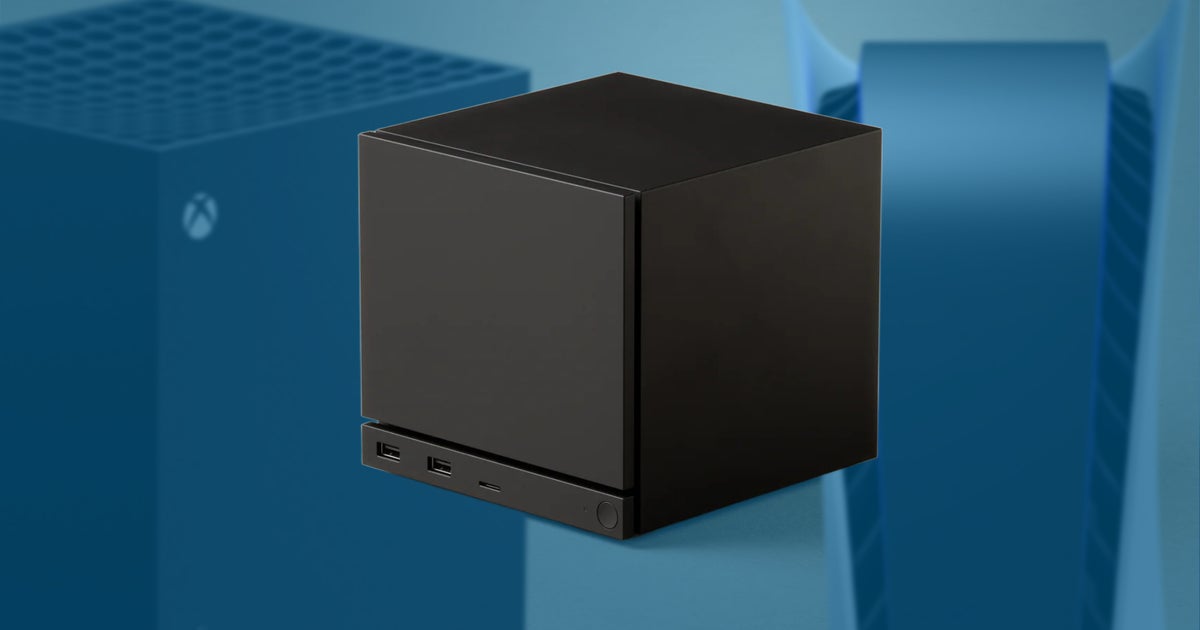
As Valve creeps into the traditionally console-dominated gaming space of the living room with its new Steam Machine, it not only opens itself to comparisons with the consoles that currently reside there, but also with how companies like Sony, Microsoft, and Nintendo do business.
A pertinent example of this subsidisation. For as long as there have been consoles, the Sonys, Microsofts, and Nintendos of the world have offered them at prices that don’t make much money. They do this – subsidise them – so people will be tempted to buy them, and in return they will have someone to sell games and subscription services to.
Given that, it’s not unreasonable for people to think a wealthy company like Valve might do the same with the Steam Machine – but it’s not. As of today’s Steam Machine pricing announcement, we know Valve is sidestepping subsidisation in the name of what it characterises as freedom.
“While [subsidisation] might seem like an easy solution,” Valve said in a press release, “it doesn’t align with our beliefs about how healthy ecosystems are built. If there’s anything we’re religious about at Valve, it’s our belief that open systems are better in the long run, for ourselves and customers.
“When companies sell their hardware under cost for competitive advantage, or buy exclusive content for it, they’re doing that to build a more closed system, one where you don’t get to choose what software you want to use,” Valve added. “We don’t want that for PC hardware, and we don’t think you should want it either.”
“A PC is a PC: the second you start locking things into certain SKUs or into certain models, it’s not really a PC any more” -Lawrence Yang
It’s a barbed response, and I followed it up with Valve in an interview prior to today’s announcement, keen to find out specifically whether subsidisation had ever been talked about. “I mean, it comes up in conversation,” interface designer Lawrence Yang told me, “but it always comes back to what our ultimate goals are and what our philosophy is around PC and open ecosystems.
“Like the blog says, a lot of times when hardware is subsidised, or you have exclusives on a certain platform, that’s because that company wants to lock [consumers] into that and that’s not what we believe in. We think that if you buy a game, you should be able to play it on any PC. And a PC is a PC: the second you start locking things into certain SKUs or into certain models, it’s not really a PC any more, in our mind. The idea of subsidising content or subsidising hardware runs counter to that.”
But you can’t play Steam games outside of Steam, so isn’t that a similar thing? “I guess you could make that argument,” Yang replied, “but at the same time, we don’t lock our hardware down. You can install Windows, you can install other game stores onto Steam Deck or Steam Machine, and that is something that we actually try to work to make possible. We don’t think that people should be locked into a game store.”
As it stands, Valve’s Steam Machine offers an expensive but relatively unique proposition in the living room: a small form-factor PC designed to work like a console but which has access to Steam’s vast library of games. What happens, though, when Microsoft’s next-generation Xbox Project Helix comes along? This, according to Xbox boss Asha Sharma, is going to be a hybrid PC and console device, and one that will “lead in performance and play your Xbox and PC games”.
It’s not clear whether Sharma means Project Helix will play games outside of an Xbox ecosystem, but I think we can safely expect it to be subsidised by Microsoft. Theoretically, then, we’re looking at a more powerful and potentially cheaper device than Steam Machine, if and when Project Helix ever arrives. Does this concern Valve?
“Steam Machine is just one more way for people to play their games. The more ways there are, the better. And so from our perspective, Project Helix is a good thing for gamers” -Yazan Aldehayyat
Engineer Yazan Aldehayyat shrugged when I asked. “We believe in choice,” he said, “so the more options people have, the better in our view. So it’s just as we said before: Steam Machine is just one more way for people to play their games. The more ways there are, the better. And so from our perspective, Project Helix is a good thing for gamers. If that’s another option for people that offers different performance points or offer different experiences, that’s great.”
How disruptive Steam Machine will be in the living room console space, we’ll have to wait and see. Though I expect the high price-point – which Valve didn’t originally envisage – will stymie it somewhat. However, Valve doesn’t necessarily consider Steam Machine as a move into console territory at all (at least not openly). “We don’t really think about it in those terms,” Yang said.
“‘Console’ has a lot of meanings to a lot of different people. We just want to help people play their games in more ways and have more fun with them. We think that making hardware is one of the ways that we can better serve our customers and make Steam available in more places. The living room is one of those places.”
Valve’s base 512GB Steam Machine model costs £879, and if you pair it with a Steam Controller – which we’ve enjoyed using – the price jumps to £938. The 2TB Steam Machine is £1,149, meanwhile, and paired with a Steam Controller, it’s £1,428. There’s a reservation system in place for ordering one, and Valve begins dispatching Steam Machines later this month – though stock is limited. But is it worth it? Chris has been reviewing the Steam Machine this week in an effort to find out.